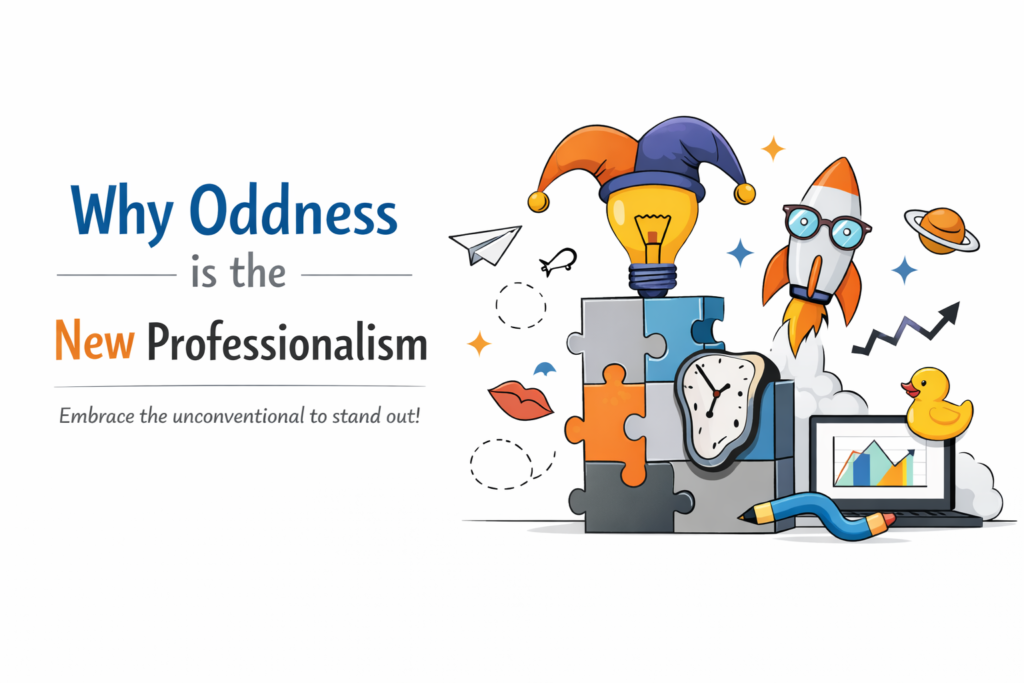
Why Oddness is the New Professionalism
Professionalism once meant conformity; however, conformity now feels invisible. Because audiences crave authenticity, oddness has become the new professionalism. While traditional brands polish their image, odd brands exaggerate quirks. Consequently, they dominate attention, spark loyalty, and redefine credibility.
Oddness is not chaos; instead, it is strategy. Oddness is not failure; rather, it is theatre. Therefore, oddness is the new badge of professionalism in a world where sameness no longer sells.
The Psychology of Why Oddness is the New Professionalism
Oddness Creates Surprise
Surprise jolts the brain, and oddness thrives on shock. Consequently, audiences remember the unexpected performance rather than the predictable routine.
Oddness Signals Authenticity
Authenticity builds trust, and oddness feels unfiltered. Therefore, audiences rally behind brands that embrace quirks rather than polish.
Oddness Builds Identity
Identity drives belonging, and oddness dramatizes personality. Consequently, audiences feel part of something unique rather than generic.
The Science Behind Why Oddness is the New Professionalism
Neurological Insights
Because novelty activates dopamine pathways, oddness amplifies pleasure. Therefore, audiences remember odd brands longer than ordinary ones.
Behavioral Economics
Since distinctiveness bias ensures odd campaigns stand out, oddness dominates recall. Moreover, scarcity effect magnifies urgency, while social proof attracts followers.
Historical Roots of Oddness as Professionalism
Oddness has always ruled culture. For instance, punk fashion dramatized rebellion, guerrilla theatre exaggerated disruption, and carnivals staged chaos. Consequently, oddness became the natural badge of credibility. Moreover, audiences expected theatre, so brands delivered.
Case Studies: Why Oddness is the New Professionalism in Action
Duolingo and Odd Professionalism in TikTok
Duolingo’s owl performed absurd skits. Because learning apps usually play serious, Duolingo embraced comedy. Consequently, audiences adored the oddness, and virality exploded.
Oatly and Odd Professionalism in Packaging
Oatly printed sarcastic copy on cartons. Since food packaging usually whispers health claims, Oatly shouted rebellion. Therefore, audiences loved the honesty, and loyalty intensified.
Supreme and Odd Professionalism in Scarcity Culture
Supreme released unpredictable drops. Because fashion usually aims for accessibility, Supreme dramatized scarcity. Consequently, fans camped outside stores, and hype became hysteria.
Red Bull and Odd Professionalism in Entertainment
Red Bull staged extreme sports spectacles. Since beverage brands usually stay safe, Red Bull staged theatre. Therefore, audiences remembered adrenaline rather than ingredients.
Benetton and Odd Professionalism in Advertising (H3)
Benetton confronted audiences with shocking imagery. Because brands usually avoid controversy, Benetton embraced it. Consequently, campaigns polarized but dominated memory.
Interesting Topic: Theatre as Professionalism
Professionalism is no longer about suits and silence; instead, it is about theatre. Because audiences remember spectacle, oddness becomes credibility. Consequently, professionalism now means performance.
How Oddness is the New Professionalism Strategically
Shock Campaigns
Shock provokes emotion, and audiences remember the jolt. Therefore, oddness dominates recall.
Scarcity Campaigns
Scarcity dramatizes urgency, and audiences act instantly. Consequently, oddness dominates conversions.
Lifestyle Campaigns
Lifestyle dramatizes aspiration, and audiences imagine themselves inside unique communities. Therefore, oddness dominates loyalty.
Humor Campaigns
Humor dramatizes oddness, and audiences share content widely. Consequently, oddness dominates virality.
Framework: How to Apply Oddness as Professionalism
Steps to Implement Odd Professionalism
- Identify quirks that dramatize personality.
- Amplify oddness deliberately.
- Balance eccentricity with clarity.
- Stage campaigns as theatre.
- Measure emotional impact.
Risks of Oddness as Professionalism
Excessive Oddness
Too much oddness feels chaotic. Consequently, audiences disengage.
Miscommunication
Oddness exaggerates meaning. Therefore, misuse sends wrong signals.
Alienation
Oddness feels niche. Consequently, mainstream audiences risk exclusion.
The Odd Boss Philosophy: Owning Oddness as Professionalism
Odd bosses don’t chase perfection. Instead, they dramatize quirks. Although safe branding feels predictable, oddness feels alive. Because people follow energy, odd branding wins.
Oddness is not failure. It is strategy. It is rebellion. It is theatre. When brands embrace oddness, they stop whispering and start commanding attention.
Conclusion: Why Oddness is the New Professionalism
Audiences don’t remember the polished resume; instead, they remember the outrageous stunt. They don’t replay the corporate jargon in their minds; rather, they replay the theatre. Oddness is the thunderclap that shakes memory, the lightning bolt that burns itself into imagination, the tidal wave that sweeps away conformity. Professionalism is no longer about blending in; instead, it is about standing out.
When brands embrace oddness, they don’t just sell they hypnotize. They don’t just persuade they possess. They don’t just inform they ignite. Audiences will forget the numbers, the charts, the rational offers. However, they will remember the gasp, the laugh, the shock, and the roar.
Oddness is not decoration. It is the weapon. It is the crown. It is the empire. Brands that dare to stage oddness as professionalism become unforgettable legends, while those clinging to conformity vanish into silence.
🎭 Why Oddness is the New Professionalism
Once upon a time, professionalism meant stiff suits, polite nods, and predictable presentations. However, the world has changed. Today, oddness—the bold, the quirky, the unexpected—is not just accepted, it’s celebrated. And more importantly, it’s becoming the new definition of professionalism.
- First of All: The Joyful Entrance
Imagine walking into a meeting with neon sneakers and a story that makes everyone laugh. Oddness breaks the ice, sparks curiosity, and sets the tone.
- Transition: As a result, people remember you not for your tie, but for your energy.
Next: The Human Connection
Oddness reminds us that professionalism isn’t about hiding personality—it’s about amplifying it. When leaders share quirks, jokes, or playful ideas, they feel more approachable.
- Transition: Consequently, teams bond faster, and collaboration becomes joyful instead of rigid.
- Meanwhile: The Creative Spark
Oddness fuels creativity. A bizarre metaphor, a dramatic analogy, or a playful exaggeration can unlock new ideas.
- Transition: In contrast, traditional professionalism often suffocates innovation with formality.
Furthermore: The Memorable Factor
Professionalism used to mean blending in. Oddness means standing out. People don’t recall the polished PowerPoint—they recall the odd story that made them smile.
- Transition: Therefore, oddness becomes a memory anchor in business settings.
- After That: The Festival of Work
Workplaces that embrace oddness feel like festivals—colorful, energetic, and alive. Employees bring their whole selves, not just their résumés.
- Transition: As a result, productivity rises because joy fuels performance.
In Addition: The Trust Effect
Oddness signals authenticity. When someone dares to be different, it shows confidence and honesty.
- Transition: Moreover, clients and colleagues trust brands and leaders who feel real, not rehearsed.
- Finally: The Joyful Legacy
Oddness leaves behind stories. Years later, people won’t remember the exact quarterly numbers—but they’ll remember the boss who danced into the meeting or the brand that staged a playful stunt.
- Transition: Ultimately, oddness builds culture, while traditional professionalism fades into routine.
🎤 Final Bow
Oddness is the new professionalism because it transforms business into a joyful stage. It’s not about breaking rules it’s about rewriting them with color, laughter, and drama.
Ready to embrace oddness and turn your brand into a performance people never forget? My Odd Boss helps you craft strategies that prove professionalism doesn’t have to be boring—it can be brilliantly odd.