Digital Marketing

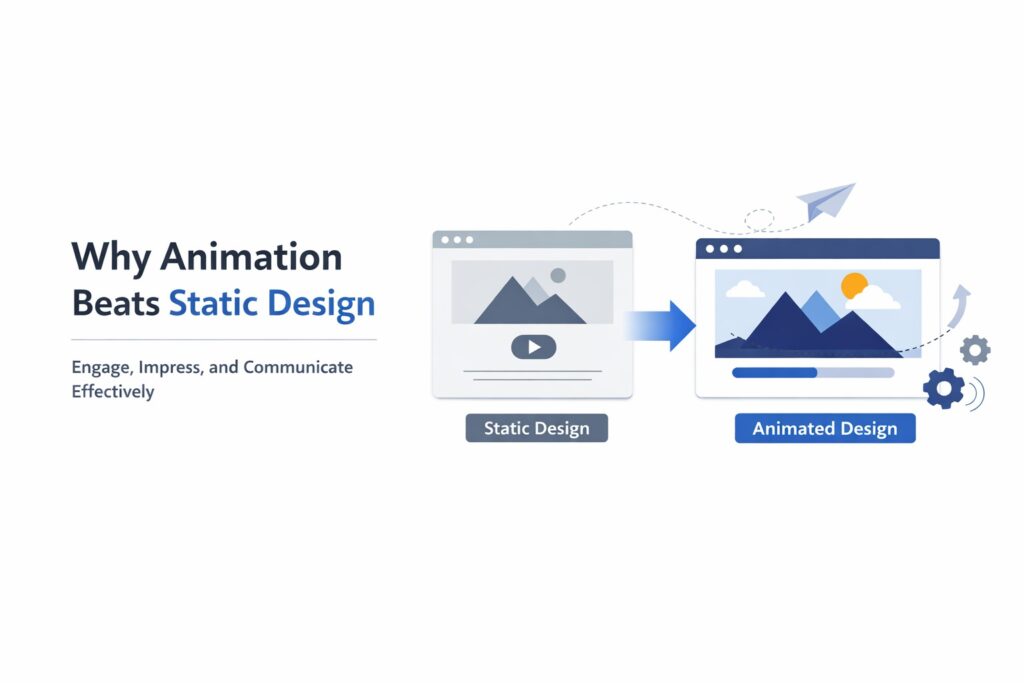
Why Animation Beats Static Design

Why Animation Beats Static Design

Why Animation Beats Static Design

Static Design is Silent, Animation is Alive 

Design is not just about visuals. Although static design once ruled branding, it now feels frozen. Because audiences scroll endlessly, static design fades into the background. Animation doesn’t whisper identity  it screams energy.

When brands embrace animation, they stop presenting images and start staging performances. As a result, they transform ordinary visuals into unforgettable experiences.

Why Animation Beats Static Design in Branding 

Animation is not decoration. It is persuasion.

Why Animation Beats Static Design for Attention 

Attention is scarce. Because animation moves, it interrupts the scroll. This interruption increases engagement instantly.

Why Animation Beats Static Design for Emotion 

Emotion drives loyalty. Although static design feels calm, animation provokes stronger reactions. Consequently, audiences remember animated brands longer.

Why Animation Beats Static Design for Storytelling

Stories shape memory. Because animation uses motion, it guides audiences through narrative arcs. This guidance increases conversions.

The Psychology Behind Why Animation Beats Static Design 

Animation works because it manipulates instincts.

Movement Triggers the Brain 

The brain notices motion first. Because animation exaggerates movement, it keeps audiences engaged. This engagement fuels discovery.

Exaggeration Amplifies Emotion 

Exaggeration intensifies impact. Although static design hides meaning, animation magnifies it. Consequently, audiences feel compelled to act.

Novelty Creates Memory 

Novelty excites the brain. Since animation feels fresh, it sticks in memory. This stickiness builds recognition.

Elements of Why Animation Beats Static Design 

Animation requires structure.

Bold Typography That Moves 

Typography sets tone. Because animated fonts exaggerate personality, they dominate perception. This dominance builds recognition.

Dynamic Colors That Shift 

Colors shape emotion. Although static palettes feel safe, animated palettes provoke. Consequently, dramatic colors increase engagement.

Unexpected Imagery That Transforms 

Imagery tells stories. Because animated visuals evolve, they captivate audiences. This captivation drives conversions.

Interactive Motion That Engages 

Interaction fuels participation. Because animation invites clicks, scrolls, and movement, it increases involvement. This involvement boosts loyalty.

Cinematic Sequences That Perform 

Sequences dramatize meaning. Since animation uses cinematic arcs, it entertains audiences. This entertainment fuels virality.

Examples of Why Animation Beats Static Design in Action 

Animation dominates iconic campaigns.

Fashion Brands Using Animated Lookbooks 

Fashion thrives on drama. Because animated visuals exaggerate style, they drive sales.

Tech Brands Using Animated Interfaces 

Tech thrives on clarity. Although information matters, animated interfaces amplify authority. This amplification builds trust.

Entertainment Brands Using Animated Trailers 

Entertainment thrives on immersion. Because animated layouts feel theatrical, they increase engagement.

Startups Using DIY Animation 

Startups thrive on disruption. Since animated design signals rebellion, it attracts attention quickly.

Why Static Design Fails Against Animation 

Static design doesn’t dominate.

It Blends Into Background Noise 

Static design feels neat. Because it doesn’t stand out, it fades quickly. This invisibility kills conversions.

It Lacks Emotional Punch 

Emotion drives action. Although static design feels calm, it doesn’t provoke. Consequently, it fails to inspire.

It Weakens Brand Personality 

Personality builds loyalty. Since static design hides identity, it weakens recognition. This weakness reduces growth.

How to Use Animation Strategically 

Animation must be intentional.

Start With a Bold Hook 

Hooks decide engagement. Because audiences judge instantly, animated openings stop the scroll. This stop increases exploration.

Use Emotional Contrast Throughout 

Contrast creates movement. When animation swings from calm to dramatic, audiences stay engaged. Consequently, conversions rise.

Add Exaggeration Strategically 

Exaggeration amplifies emotion. Although static design hides impact, animation makes it unforgettable. This amplification fuels action.

Guide Audiences Through Narrative Flow 

Narratives shape journeys. Because animation uses arcs, it guides behavior. This guidance increases conversions.

End With a Mic‑Drop CTA 

Endings shape memory. Because audiences remember final moments, animated CTAs increase clicks. This increase drives sales.

Case Studies: Why Animation Beats Static Design That Converts 

Apple’s Animated Product Launches 

Apple uses animation to dramatize anticipation. Because each reveal feels theatrical, audiences share globally.

Spotify’s Animated Playlists 

Spotify uses animation to signal vitality. Since static design would fade, animation keeps the brand fresh.

Nike’s Animated Typography 

Nike amplifies its slogan with animated fonts. Because static design would weaken impact, animation makes it iconic.

Netflix’s Animated Previews 

Netflix thrives on immersion. Because animated previews exaggerate emotion, they dominate streaming culture.

The Risks of Why Animation Beats Static Design

Animation must be controlled.

It Can Overwhelm Audiences 

Excessive animation feels chaotic. Because balance matters, brands must avoid overload. This avoidance protects trust.

It Can Miscommunicate Identity 

Animation exaggerates meaning. When brands misuse it, they send wrong signals. Consequently, identity suffers.

It Can Reduce Accessibility 

Complex motion hinders readability. Since accessibility matters, brands must balance animation with clarity.

The Odd Boss Philosophy: Animation is Theatre, Static is Silence 

Odd bosses don’t freeze visuals. They choreograph them. Although static design feels safe, animation feels alive. Because people follow energy, animated design wins.

Animation is not chaos. It is theatre. It is emotion. It is impact. When brands embrace animation, they stop whispering and start commanding attention.

Conclusion: Why Animation Beats Static Design Because It Commands Emotion 

Animation interrupts the scroll. It provokes emotion. It guides behavior. Because audiences crave intensity, animated design dominates conversions.

When brands embrace animation strategically, they unlock new levels of recognition. That shift transforms their presence, their reach, and their influence.

Ready to Use Animation Like an Odd Boss? 


If you want design that feels bold, theatrical, and impossible to ignore, you’re ready for the Odd Boss approach.

>Partner with My Odd Boss to craft animated branding strategies that shock, seduce, and dominate. Let’s turn your visuals into performances.
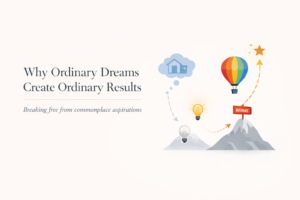
Why Ordinary Dreams Create Ordinary Results
Dreams shape direction. However, not all dreams are created equal. While many people dream, only a few achieve extraordinary results. Why? Because ordinary dreams often lead to ordinary outcomes. In fact, when goals lack clarity, ambition, and emotional drive, results usually remain average.

Therefore, understanding the connection between dreams and results is essential. More importantly, learning how to elevate your dreams can completely transform your personal and professional life.


.

What Are Ordinary Dreams?

Ordinary dreams are safe, familiar, and comfortable. For example, they sound like:

  • “I just want a stable job.”
  • “I want to be comfortable.”
  • “I hope things work out.”

At first glance, these dreams seem reasonable. However, they lack urgency and vision. As a result, they don’t demand growth, discipline, or bold action.

Moreover, ordinary dreams rarely challenge limiting beliefs. Consequently, they keep people stuck in routines instead of pushing them toward progress.

Why Ordinary Dreams Lead to Ordinary Results

1. They Don’t Inspire Massive Action

Without a powerful dream, motivation fades quickly. Therefore, people only take minimal action—just enough to get by. Over time, this results in average performance and predictable outcomes.

In contrast, bold dreams require consistent effort. Because they feel meaningful, they naturally fuel persistence.

2. They Keep You in Your Comfort Zone

Ordinary dreams feel safe. However, growth never happens in comfort. When goals don’t scare you, they don’t stretch you.

As a result, people avoid risks, resist change, and settle for less. Eventually, this mindset produces ordinary results—again and again.

3. They Lack Emotional Connection

Dreams without emotion are easy to abandon. Therefore, when challenges arise, ordinary dreams collapse under pressure.

On the other hand, emotionally charged dreams create resilience. Even when things go wrong, purpose keeps you moving forward.

The Psychology Behind Big Dreams

Why Ordinary Dreams Lead to Ordinary Results
Big dreams activate the brain differently. Specifically, they engage focus, creativity, and problem-solving. As a result, your mind starts searching for opportunities instead of excuses.

Additionally, ambitious dreams rewire self-identity. You stop asking, “Can I do this?” and start asking, “How can I do this?”

Thus, mindset shifts first results follow later.

How to Upgrade from Ordinary to Extraordinary Dreams

1. Dream Bigger Than Logic Allows

Initially, logic may say your dream is unrealistic. However, that’s exactly the point. Big dreams force growth.

Therefore, allow yourself to imagine without limits before worrying about “how.”

2. Attach a Strong Why

When your dream connects to purpose, action becomes easier. For example, ask yourself:

  • Who benefits if I succeed?
  • What pain am I solving?
  • What legacy do I want to leave?

As a result, your dream becomes non-negotiable.

3. Turn Dreams into Clear Vision

Vague dreams create vague results. Consequently, clarity is essential.

Instead of saying, “I want success,” define:

  • What success looks like
  • When you want it
  • Why it matters

Therefore, your brain receives clear instructions and begins executing.

Case Study: From Ordinary Dream to Extraordinary Results

Meet Rahul – A Corporate Employee with a Safe Dream


Rahul worked in a mid-level corporate job earning a decent salary.

His dream was simple:

“I want a promotion and a slightly higher income so life can be comfortable.”

Because his dream was modest, his actions were too:

He worked only during office hours

Avoided taking leadership roles

Didn’t learn new skills outside work

Waited for yearly appraisals

After five years, Rahul got small raises — but nothing life-changing.

His dream created ordinary results.

The Turning Point


One day Rahul attended a seminar on entrepreneurship and personal growth.

He realized something powerful:

“I’ve been dreaming small because I was afraid of failing big.”

So he changed his dream:

  •  Instead of just a promotion, he aimed to build a digital marketing business alongside his job and become financially independent within five years.

Suddenly, his actions changed:

  • Learned marketing skills online every night
  • Took freelance projects on weekends
  • Networked with business owners
  • Invested time in personal development

The Result

Within three years:

  • Rahul was earning more from his side business than his job
  • Quit corporate life
  • Started a small agency

His life transformed not because of luck, but because his dream became bigger and clearer.

Why Big Dreams Create Bigger Results

Here’s what happens when you dream boldly:

1. Bigger Dreams Create Urgency

You can’t stay lazy when your dream excites you.

2. Bigger Dreams Force Growth

You must improve skills, mindset, and habits.

3. Bigger Dreams Build Resilience

Failures feel like lessons, not stopping points.

4. Bigger Dreams Attract Opportunities

People, ideas, and chances show up when you take bold action.

Conclusion: Dream Bigger to Live Bigger

Ordinary dreams are safe.
But safety rarely leads to greatness.

If you dream only of what feels realistic today, you’ll stay in the same place tomorrow.

Extraordinary results require:

  •  Extraordinary vision
  • Extraordinary effort
  •  Extraordinary belief

Your life will never rise above the size of your dreams.

So don’t just wish for comfort.
Don’t settle for “good enough.”

  •  Dare to dream bigger.
  •  Act bolder.
  • Create extraordinary results.

At My Odd Boss, we help businesses build meaningful brands through strategy, design, and consistency.

Need Professional Digital Marketing Support ?

We help brands grow with data-driven statergies and creative execution.

About My Odd Boss

My Odd Boss is a full-service agency offering branding, design, printing, digital marketing, web development, and consulting services.

Related Insights

chatgpt image feb 6, 2026, 07 18 17 pm

The Corporate Costume

Dressing Identity in Oddness Professional identity is not stitched from suits and ties; instead, it is sewn from spectacle. Because audiences crave authenticity, odd branding

Read More »
branding is theatre

Branding Is Theater

Branding Is Theater: How to Turn Your Business to a Stage where the Customers Cheer. In the current hyper competitive market place, products are readily

Read More »

Ready To Grow Your Brand With Confidence ?

Partner with My Odd Boss for statergy-led digital solutions.

Scroll to Top