Digital Marketing

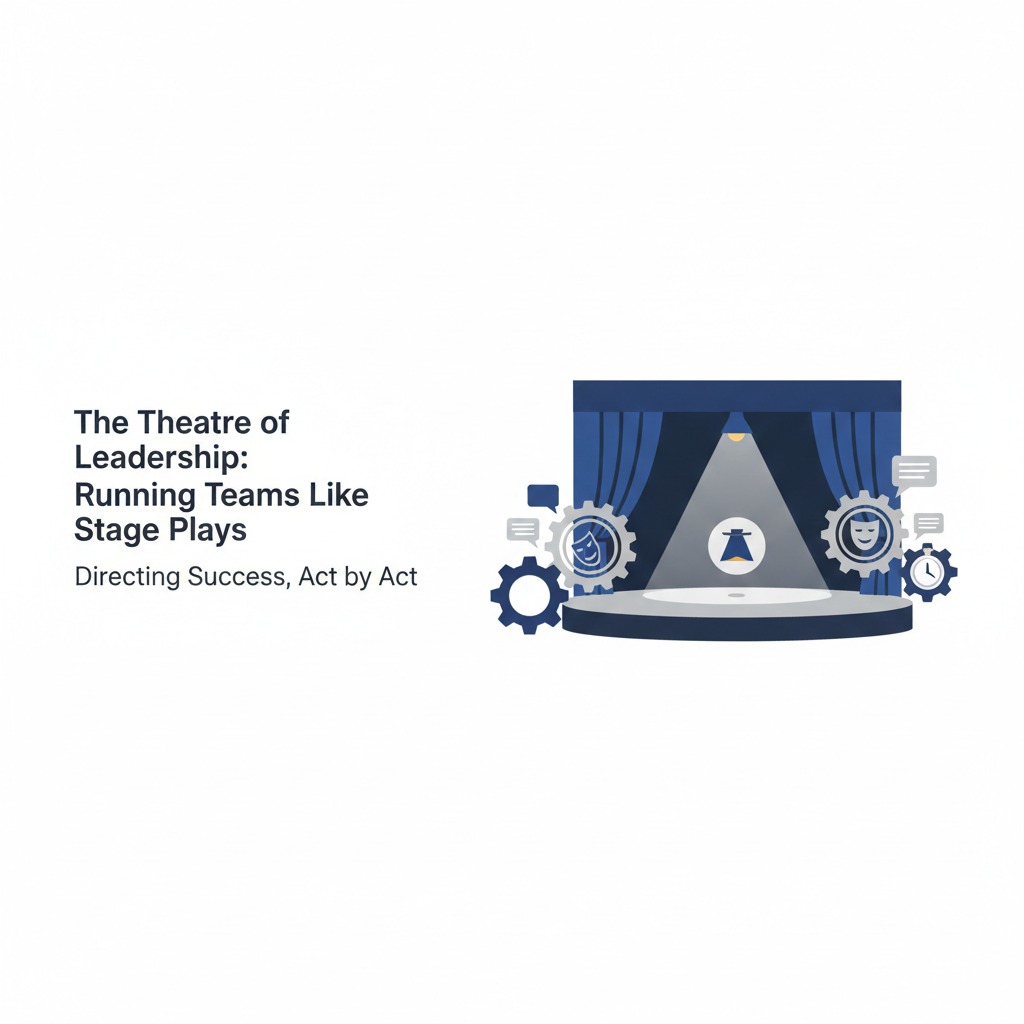
The Theatre of Leadership: Running Teams Like Stage Plays

The Theatre of Leadership: Running Teams Like Stage Plays

The Theatre of Leadership: Running Teams Like Stage Plays

Leadership isn’t just management—it’s performance. The most unforgettable leaders don’t simply assign tasks; they direct stage plays. Every team member becomes a character, every project a scene, and every success a standing ovation. The theatre of leadership dramatizes teamwork, making it bold, memorable, and inspiring.

Ordinary leadership fades into the background. Theatrical leadership, however, commands attention. It transforms workplaces into living dramas where employees feel like stars rather than extras. As a result, leaders who embrace theatre create cultures that thrive on energy, creativity, and loyalty.


Why Ordinary Leadership Fails

Ordinary leadership often feels transactional. It focuses on checklists, deadlines, and predictable routines. Consequently, employees disengage because they don’t feel part of something larger.

  • It feels transactional, not transformational. Safe leadership manages tasks but fails to inspire.
  • It lacks drama and emotional connection. Without flair, teams lose motivation.
  • It doesn’t inspire audiences (employees) to give their best performance.

Ordinary leadership whispers. Theatrical leadership roars.


🌟 Why Theatrical Leadership Wins

Theatrical leadership wins because it dramatizes vision and magnifies emotion. It doesn’t just manage—it captivates.

Identity That Commands Attention

Leaders who embrace theatre dramatize their style, making themselves impossible to ignore.

Creativity That Sparks Innovation

By treating projects like performances, leaders encourage improvisation and bold ideas.

Emotional Impact That Inspires Loyalty

Employees feel part of an epic narrative, not just a routine job.

Culture That Thrives on Drama


🎬 Leadership as Performance

Leadership is theatre. Every meeting is a stage, every presentation a performance, every decision a plot twist. Leaders who embrace this philosophy dramatize their vision, exaggerate their uniqueness, and make leadership feel like art.

For example, when Steve Jobs unveiled the iPhone, he didn’t just present a product—he staged a revolution. Similarly, Richard Branson’s eccentric stunts dramatized Virgin’s adventurous culture. These leaders understood that performance is persuasion.


🧠 The Psychology Behind Theatrical Leadership

Oddness works because it disrupts expectations. Humans are wired to notice what breaks patterns. In psychology, this is called the Von Restorff effect—the tendency to remember things that stand out.


⚡ The Strategic Advantage of Theatre

Theatre isn’t frivolous—it’s strategic. It dramatizes authority, exaggerates vision, and magnetizes attention.

  • Theatre creates tension. Employees lean in when they don’t know what’s coming next.
  • Theatre builds culture. Teams rally behind leaders who make work feel like performance.
  • Theatre drives innovation. Unconventional thinking sparks unconventional solutions.
  • Theatre attracts talent. Bold leaders attract bold people.

In short, the theatre of leadership turns workplaces into stages, employees into performers, and brands into movements.


📖 Case Studies of Theatrical Leaders

Steve Jobs – The Visionary Performer

Jobs dramatized his product launches with suspense, storytelling, and flair. His theatrical approach made Apple iconic.

Elon Musk – The Disruptive Showman

Musk’s tweets, stunts, and bold presentations dramatize his brand as daring and unstoppable.

Richard Branson – The Entertainer

Branson’s odd stunts—from dressing as a bride to flying hot-air balloons—weren’t random. They dramatized Virgin’s adventurous spirit.

These leaders prove that theatrical leadership isn’t eccentric—it’s effective.


🎭 The Odd Boss Philosophy

At My Odd Boss, we believe theatre is the ultimate leadership advantage. Drama, exaggeration, and boldness transform bosses into icons. Ordinary leaders fade. Theatrical leaders thrive.

Theatre dramatizes vision, exaggerates uniqueness, and inspires loyalty. It turns workplaces into theatres, employees into cast members, and brands into unforgettable performances.


🏆 Benefits of Theatrical Leadership

Theatrical leadership delivers results because its style creates impact:

  • Higher engagement: Employees are more invested when leadership feels exciting.
  • Stronger loyalty: Theatre inspires devotion by dramatizing vision.
  • Better innovation: Theatrical thinking sparks unconventional ideas.
  • Memorable branding: Leaders who perform make their companies stand out.

Theatrical leaders don’t just lead—they dramatize. And dramatization is persuasion.


🛠️ How to Run Teams Like Stage Plays

Running teams like stage plays requires intentional strategy. Oddness isn’t chaos—it’s choreography.

  1. Set the stage. Create a vision that feels larger than life.
  2. Cast wisely. Assign roles that highlight each person’s strengths.
  3. Direct with drama. Use storytelling, exaggeration, and bold communication to inspire.
  4. Build suspense. Keep teams engaged with challenges and cliffhangers.
  5. Celebrate the finale. Recognize victories like curtain calls that leave lasting impact.

Therefore, leaders must treat every project like a performance worth remembering.


🧩 Theatre and Culture

Theatre shapes culture by dramatizing values. Leaders exaggerate what matters, turning principles into performances.

For example:

  • A leader who values creativity might stage brainstorming sessions like improv theatre.
  • A leader who values resilience might dramatize challenges as epic battles.

Thus, theatrical leadership makes culture feel alive.


🔥 Why Theatre Is the Future of Leadership

The future belongs to theatrical leaders. In a world of AI, automation, and routine, human leadership must be dramatic to stand out. Theatre will dominate because it offers what machines cannot: emotion, unpredictability, and performance.

Ordinary leaders will fade into irrelevance. Theatrical leaders, however, will become legends.


Conclusion

Theatre isn’t decoration—it’s strategy. Leaders who dramatize their vision, spark creativity, and inspire loyalty create unforgettable businesses. Ordinary leadership whispers. Theatrical leadership roars.

In the theatre of leadership, drama isn’t a weakness—it’s the spotlight.


Ready to step into the spotlight and lead with drama? 🚀
👉 Partner with My Odd Boss to craft bold, theatrical leadership strategies that turn your team into a standing ovation.

Contact us today and let’s make your brand unforgettable.

Why Ordinary Dreams Create Ordinary Results
Dreams shape direction. However, not all dreams are created equal. While many people dream, only a few achieve extraordinary results. Why? Because ordinary dreams often lead to ordinary outcomes. In fact, when goals lack clarity, ambition, and emotional drive, results usually remain average.

Therefore, understanding the connection between dreams and results is essential. More importantly, learning how to elevate your dreams can completely transform your personal and professional life.


.

What Are Ordinary Dreams?

Ordinary dreams are safe, familiar, and comfortable. For example, they sound like:

  • “I just want a stable job.”
  • “I want to be comfortable.”
  • “I hope things work out.”

At first glance, these dreams seem reasonable. However, they lack urgency and vision. As a result, they don’t demand growth, discipline, or bold action.

Moreover, ordinary dreams rarely challenge limiting beliefs. Consequently, they keep people stuck in routines instead of pushing them toward progress.

Why Ordinary Dreams Lead to Ordinary Results

1. They Don’t Inspire Massive Action

Without a powerful dream, motivation fades quickly. Therefore, people only take minimal action—just enough to get by. Over time, this results in average performance and predictable outcomes.

In contrast, bold dreams require consistent effort. Because they feel meaningful, they naturally fuel persistence.

2. They Keep You in Your Comfort Zone

Ordinary dreams feel safe. However, growth never happens in comfort. When goals don’t scare you, they don’t stretch you.

As a result, people avoid risks, resist change, and settle for less. Eventually, this mindset produces ordinary results—again and again.

3. They Lack Emotional Connection

Dreams without emotion are easy to abandon. Therefore, when challenges arise, ordinary dreams collapse under pressure.

On the other hand, emotionally charged dreams create resilience. Even when things go wrong, purpose keeps you moving forward.

The Psychology Behind Big Dreams

Why Ordinary Dreams Lead to Ordinary Results
Big dreams activate the brain differently. Specifically, they engage focus, creativity, and problem-solving. As a result, your mind starts searching for opportunities instead of excuses.

Additionally, ambitious dreams rewire self-identity. You stop asking, “Can I do this?” and start asking, “How can I do this?”

Thus, mindset shifts first results follow later.

How to Upgrade from Ordinary to Extraordinary Dreams

1. Dream Bigger Than Logic Allows

Initially, logic may say your dream is unrealistic. However, that’s exactly the point. Big dreams force growth.

Therefore, allow yourself to imagine without limits before worrying about “how.”

2. Attach a Strong Why

When your dream connects to purpose, action becomes easier. For example, ask yourself:

  • Who benefits if I succeed?
  • What pain am I solving?
  • What legacy do I want to leave?

As a result, your dream becomes non-negotiable.

3. Turn Dreams into Clear Vision

Vague dreams create vague results. Consequently, clarity is essential.

Instead of saying, “I want success,” define:

  • What success looks like
  • When you want it
  • Why it matters

Therefore, your brain receives clear instructions and begins executing.

Case Study: From Ordinary Dream to Extraordinary Results

Meet Rahul – A Corporate Employee with a Safe Dream


Rahul worked in a mid-level corporate job earning a decent salary.

His dream was simple:

“I want a promotion and a slightly higher income so life can be comfortable.”

Because his dream was modest, his actions were too:

He worked only during office hours

Avoided taking leadership roles

Didn’t learn new skills outside work

Waited for yearly appraisals

After five years, Rahul got small raises — but nothing life-changing.

His dream created ordinary results.

The Turning Point


One day Rahul attended a seminar on entrepreneurship and personal growth.

He realized something powerful:

“I’ve been dreaming small because I was afraid of failing big.”

So he changed his dream:

  •  Instead of just a promotion, he aimed to build a digital marketing business alongside his job and become financially independent within five years.

Suddenly, his actions changed:

  • Learned marketing skills online every night
  • Took freelance projects on weekends
  • Networked with business owners
  • Invested time in personal development

The Result

Within three years:

  • Rahul was earning more from his side business than his job
  • Quit corporate life
  • Started a small agency

His life transformed not because of luck, but because his dream became bigger and clearer.

Why Big Dreams Create Bigger Results

Here’s what happens when you dream boldly:

1. Bigger Dreams Create Urgency

You can’t stay lazy when your dream excites you.

2. Bigger Dreams Force Growth

You must improve skills, mindset, and habits.

3. Bigger Dreams Build Resilience

Failures feel like lessons, not stopping points.

4. Bigger Dreams Attract Opportunities

People, ideas, and chances show up when you take bold action.

Conclusion: Dream Bigger to Live Bigger

Ordinary dreams are safe.
But safety rarely leads to greatness.

If you dream only of what feels realistic today, you’ll stay in the same place tomorrow.

Extraordinary results require:

  •  Extraordinary vision
  • Extraordinary effort
  •  Extraordinary belief

Your life will never rise above the size of your dreams.

So don’t just wish for comfort.
Don’t settle for “good enough.”

  •  Dare to dream bigger.
  •  Act bolder.
  • Create extraordinary results.

At My Odd Boss, we help businesses build meaningful brands through strategy, design, and consistency.

Need Professional Digital Marketing Support ?

We help brands grow with data-driven statergies and creative execution.

About My Odd Boss

My Odd Boss is a full-service agency offering branding, design, printing, digital marketing, web development, and consulting services.

Related Insights

chatgpt image feb 6, 2026, 07 18 17 pm

The Corporate Costume

Dressing Identity in Oddness Professional identity is not stitched from suits and ties; instead, it is sewn from spectacle. Because audiences crave authenticity, odd branding

Read More »
branding is theatre

Branding Is Theater

Branding Is Theater: How to Turn Your Business to a Stage where the Customers Cheer. In the current hyper competitive market place, products are readily

Read More »

Ready To Grow Your Brand With Confidence ?

Partner with My Odd Boss for statergy-led digital solutions.

Scroll to Top