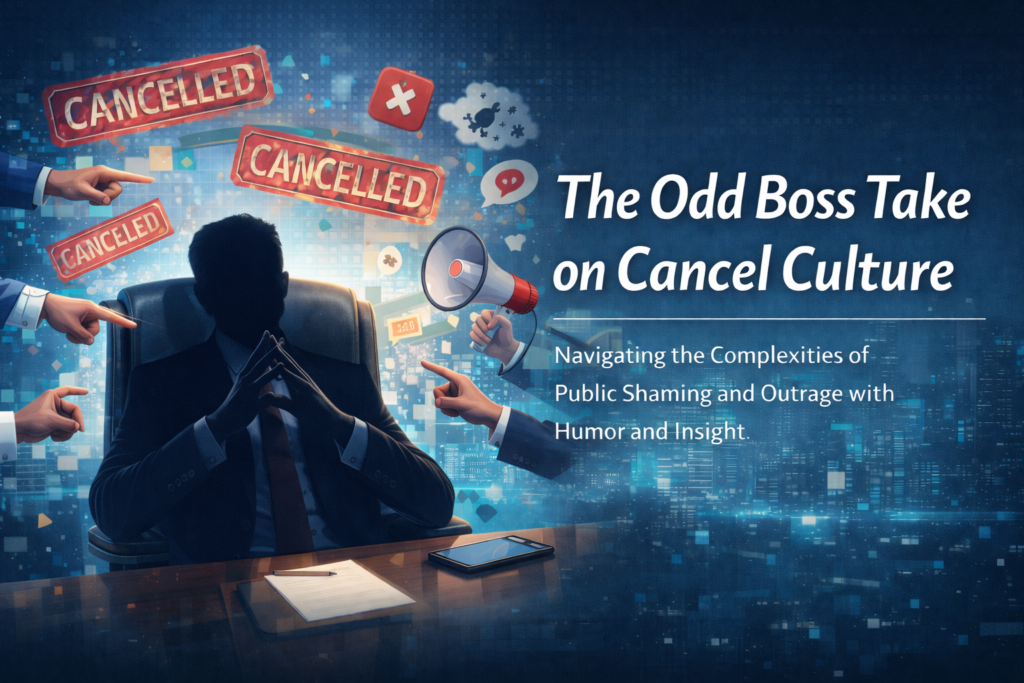
The Odd Boss Take on Cancel Culture
Cancel culture is not a whisper; instead, it is a roar. Because audiences crave accountability, cancel culture dominates headlines. While traditional brands fear cancellation, odd brands dramatize rebellion. Consequently, cancel culture becomes both a threat and an opportunity.
Odd bosses don’t hide from outrage; rather, they harness it. Therefore, cancel culture is not the end of professionalism; instead, it is the stage for reinvention.
The Psychology Behind The Odd Boss Take on Cancel Culture
Emotion in Cancel Culture
Emotion drives recall, and cancel culture amplifies emotion deliberately. Therefore, audiences remember the scandal, the spectacle, and the statement rather than the detail.
Identity in Cancel Culture
Identity fuels belonging, and cancel culture dramatizes morality. Consequently, audiences rally behind movements that feel righteous rather than neutral.
Surprise in Cancel Culture
Surprise jolts the brain, and cancel culture thrives on shock. Therefore, audiences replay the twist long after the scroll.
The Science Behind Cancel Culture
Neurological Insights
Because dopamine spikes during outrage, audiences feel rewarded. Moreover, the amygdala prioritizes emotional experiences, so cancel culture dominates recall. Consequently, emotional arousal strengthens synaptic connections, and memory becomes durable.
Behavioral Economics
Distinctiveness bias ensures scandals stand out, while scarcity effect magnifies urgency. Additionally, social proof attracts followers when outrage goes viral. Therefore, cancel culture reshapes consumer behavior.
Historical Roots of Cancel Culture
Oddness and spectacle have always ruled accountability. For instance, medieval shaming rituals dramatized morality, punk concerts exaggerated rebellion, and guerrilla theatre shocked audiences. Consequently, cancel culture became the modern stage for outrage. Moreover, audiences expected theatre, so brands delivered.
Case Studies: The Odd Boss Take on Cancel Culture in Action
Nike and Cancel Culture Defiance
Nike dramatized rebellion by supporting Colin Kaepernick. Because audiences craved justice, Nike embraced controversy. Consequently, loyalty intensified, and outrage became theatre.
Patagonia and Cancel Culture Honesty
Patagonia dramatized sustainability by rejecting fast fashion. Since audiences craved authenticity, Patagonia embraced honesty. Therefore, cancel culture became a badge of credibility.
Supreme and Cancel Culture Scarcity
Supreme dramatized chaos with unpredictable drops. Because fashion thrives on hype, Supreme exaggerated scarcity. Consequently, outrage over exclusivity fueled hysteria.
Benetton and Cancel Culture Shock Advertising
Benetton confronted audiences with shocking imagery. Since brands usually avoid controversy, Benetton embraced it. Therefore, campaigns polarized but dominated memory.
Duolingo and Cancel Culture Oddness
Duolingo dramatized humor with absurd TikTok skits. Because learning apps usually play serious, Duolingo embraced comedy. Consequently, virality exploded, and oddness became resilience.
Interesting Topic: Theatre Meets Cancel Culture
Cancel culture is not silence; instead, it is theatre. Because audiences remember spectacle, cancel culture becomes performance. Consequently, brands that dramatize accountability transform outrage into loyalty.
How Cancel Culture Shapes Strategy
Shock Campaigns in Cancel Culture
Shock provokes emotion, and audiences remember the jolt. Therefore, cancel culture campaigns dominate recall.
Scarcity Campaigns in Cancel Culture
Scarcity dramatizes urgency, and audiences act instantly. Consequently, cancel culture magnifies conversions.
Lifestyle Campaigns in Cancel Culture
Lifestyle dramatizes aspiration, and audiences imagine themselves inside unique communities. Therefore, cancel culture magnifies loyalty.
Humor Campaigns in Cancel Culture
Humor dramatizes oddness, and audiences share content widely. Consequently, cancel culture magnifies virality.
Framework: How to Harness Cancel Culture
Steps to Implement Cancel Culture Strategy
- Identify cultural triggers, and amplify them.
- Align campaigns with values deliberately.
- Balance spectacle with clarity consistently.
- Stage campaigns as theatre strategically.
- Measure emotional impact continuously.
Risks of Cancel Culture
Excessive Outrage
Too much outrage feels chaotic. Consequently, audiences disengage.
Miscommunication
Cancel culture exaggerates meaning. Therefore, misuse sends wrong signals.
Alienation
Cancel culture feels niche. Consequently, mainstream audiences risk exclusion.
The Odd Boss Philosophy: Owning Cancel Culture
Odd bosses don’t chase silence. Instead, they dramatize rebellion. Although safe branding feels predictable, cancel culture feels alive. Because people follow energy, outrage becomes empire.
Cancel culture is not failure. It is strategy. It is rebellion. It is theatre. When brands embrace it, they stop whispering and start commanding attention.
Conclusion: The Odd Boss Take on Cancel Culture
Audiences don’t remember the apology letter; instead, they remember the outrageous stunt. They don’t replay the corporate jargon in their minds; rather, they replay the theatre. Cancel culture is the thunderclap that shakes memory, the lightning bolt that burns itself into imagination, the tidal wave that sweeps away conformity. Professionalism is no longer about blending in; instead, it is about standing out.
When brands embrace cancel culture, they don’t just survive — they hypnotize. They don’t just persuade — they possess. They don’t just inform — they ignite. Audiences will forget the numbers, the charts, the rational offers. However, they will remember the gasp, the laugh, the shock, and the roar.
Cancel culture is not decoration. It is the weapon. It is the crown. It is the empire. Brands that dare to stage cancel culture become unforgettable legends, while those clinging to silence vanish into obscurity.
🎭 The Odd Boss Take on Cancel Culture
Cancel culture is often framed as destructive. However, Odd Boss sees it as theatre. It’s a stage where society exaggerates flaws, spotlights values, and demands accountability. And when brands embrace the drama, they can turn criticism into comebacks.
First of All: The Curtain Rises
Cancel culture begins like a play the spotlight shines, the audience gasps, and someone is called out.
- Transition: As a result, brands must face the music, but they also gain a chance to rewrite their script.
Next: The Villain Reveal
Every story needs a villain. Cancel culture exaggerates flaws—tone‑deaf ads, careless comments, outdated practices.
- Transition: Consequently, the drama forces brands to evolve faster than quiet criticism ever could.
Meanwhile: The Audience Participation
Cancel culture is interactive. Audiences clap, boo, remix, and meme the story in real time.
- Transition: In contrast, old‑school scandals stayed behind closed doors.
Furthermore: The Redemption Arc
Odd brands don’t fear cancel culture they embrace it. They apologize boldly, pivot theatrically, and stage comebacks that feel larger‑than‑life.
- Transition: Therefore, cancel culture becomes less about punishment and more about transformation.
After That: The Joyful Twist
Odd Boss believes joy can flip the script. Instead of hiding, brands lean into humor, creativity, and storytelling to rebuild trust.
- Transition: As a result, audiences don’t just forgive—they cheer the comeback.
In Addition: The Festival of Accountability
Cancel culture, reframed, is like a festival of values. It’s noisy, colorful, and dramatic but it reminds everyone what matters.
- Transition: Moreover, brands that join authentically earn respect and loyalty.
Beyond That: The Shock Factor
Cancel culture thrives on shock. Odd brands use this energy to stage bold stunts or exaggerated campaigns that prove they’ve changed.
- Transition: Consequently, the shock transforms into a spotlight for reinvention.
Meanwhile Again: The Story Retelling
Audiences love retelling redemption stories. Cancel culture provides the drama, but odd brands provide the comeback narrative.
- Transition: In turn, these stories spread faster than the original scandal.
Additionally: The Trust Effect
Oddness signals authenticity. When brands dare to be different even in apology they show confidence and honesty.
- Transition: Therefore, trust grows stronger after the storm.
Finally: The Standing Ovation
When the curtain falls, audiences remember the redemption arc, not the stumble. Cancel culture becomes part of the brand’s legend.
- Transition: Ultimately, oddness turns cancel culture from a threat into a stage for growth.
🎤 Final Bow
Cancel culture isn’t the end it’s an act in the play. Odd brands don’t just survive it; they perform through it. With drama, joy, and bold reinvention, they transform cancel culture into a spotlight for resilience
Ready to turn criticism into theatre? My Odd Boss helps you craft comebacks that don’t just repair reputation—they earn standing ovations.