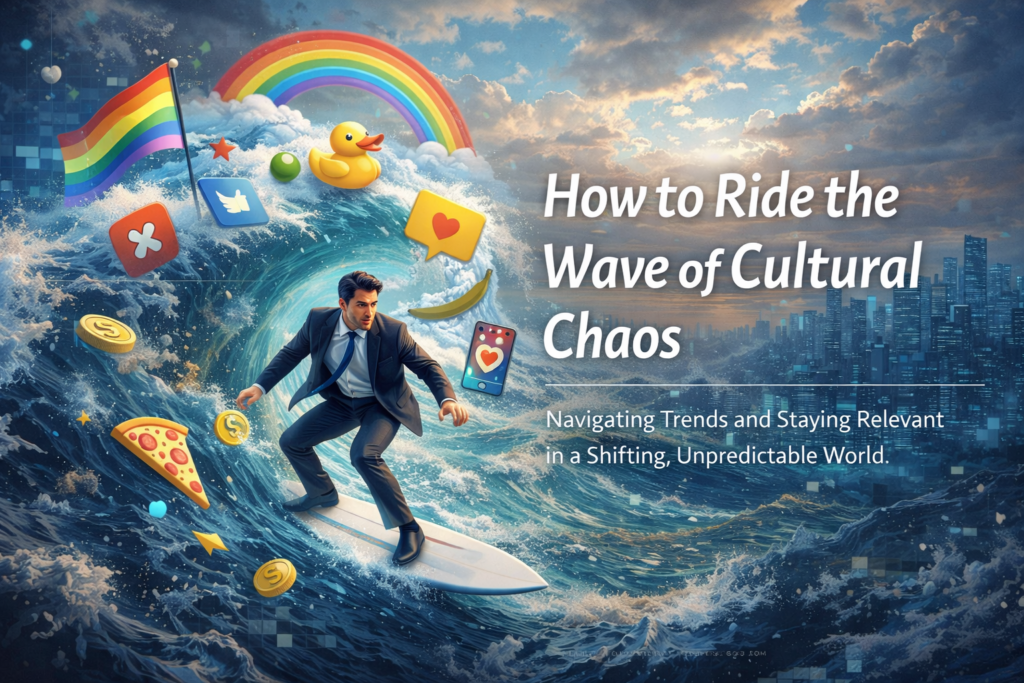
How to Ride the Wave of Cultural Chaos
Culture is not calm; instead, it is chaos. Because audiences crave intensity, cultural chaos dominates headlines, feeds, and conversations. While ordinary brands drown in confusion, odd brands surf the storm. Consequently, cultural chaos becomes not a threat but a stage.
Odd bosses don’t resist the wave; rather, they ride it. Therefore, cultural chaos is not destruction; instead, it is opportunity. It is not noise; rather, it is theatre.
The Psychology of Riding Cultural Chaos
Emotion in Cultural Chaos (H3)
Emotion drives recall, and chaos amplifies emotion deliberately. Therefore, audiences remember the scandal, the spectacle, and the shock rather than the detail. Moreover, chaos transforms transactions into theatre.
Identity in Cultural Chaos
Identity fuels belonging, and chaos dramatizes morality. Consequently, audiences rally behind movements that feel righteous rather than neutral. Furthermore, identity transforms consumption into ritual.
Surprise in Cultural Chaos
Surprise jolts the brain, and chaos thrives on shock. Therefore, audiences replay the twist long after the scroll. In addition, surprise magnifies virality, so campaigns spread faster than logic ever could.
The Science Behind Cultural Chaos
Neurological Insights
Because dopamine spikes during outrage, audiences feel rewarded. Moreover, the amygdala prioritizes emotional experiences, so chaos dominates recall. Consequently, emotional arousal strengthens synaptic connections, and memory becomes durable.
Behavioral Economics
Distinctiveness bias ensures scandals stand out, while scarcity effect magnifies urgency. Additionally, social proof attracts followers when chaos goes viral. Therefore, cultural chaos reshapes consumer behavior.
Historical Roots of Cultural Chaos
Oddness and spectacle have always ruled disruption. For instance, carnivals exaggerated rebellion, punk concerts dramatized defiance, and guerrilla theatre shocked audiences. Consequently, cultural chaos became the modern stage for outrage. Moreover, audiences expected theatre, so brands delivered.
Case Studies: Riding the Wave of Cultural Chaos
Nike and Cultural Chaos Defiance
Nike dramatized rebellion by supporting Colin Kaepernick. Because audiences craved justice, Nike embraced controversy. Consequently, loyalty intensified, and outrage became theatre.
Patagonia and Cultural Chaos Honesty
Patagonia dramatized sustainability by rejecting fast fashion. Since audiences craved authenticity, Patagonia embraced honesty. Therefore, chaos became a badge of credibility.
Supreme and Cultural Chaos Scarcity
Supreme dramatized chaos with unpredictable drops. Because fashion thrives on hype, Supreme exaggerated scarcity. Consequently, outrage over exclusivity fueled hysteria.
Benetton and Cultural Chaos Shock Advertising
Benetton confronted audiences with shocking imagery. Since brands usually avoid controversy, Benetton embraced it. Therefore, campaigns polarized but dominated memory.
Duolingo and Cultural Chaos Oddness
Duolingo dramatized humor with absurd TikTok skits. Because learning apps usually play serious, Duolingo embraced comedy. Consequently, virality exploded, and oddness became resilience.
Interesting Topic: Theatre Meets Cultural Chaos
Cultural chaos is not silence; instead, it is theatre. Because audiences remember spectacle, chaos becomes performance. Consequently, brands that dramatize accountability transform outrage into loyalty.
How to Ride the Wave of Cultural Chaos Strategically
Shock Campaigns
Shock provokes emotion, and audiences remember the jolt. Therefore, chaos campaigns dominate recall.
Scarcity Campaigns
Scarcity dramatizes urgency, and audiences act instantly. Consequently, chaos magnifies conversions.
Lifestyle Campaigns
Lifestyle dramatizes aspiration, and audiences imagine themselves inside unique communities. Therefore, chaos magnifies loyalty.
Humor Campaigns (H3)
Humor dramatizes oddness, and audiences share content widely. Consequently, chaos magnifies virality.
Framework: How to Harness Cultural Chaos
Steps to Implement Chaos Strategy
- Identify cultural triggers, and amplify them.
- Align campaigns with values deliberately.
- Balance spectacle with clarity consistently.
- Stage campaigns as theatre strategically.
- Measure emotional impact continuously.
Risks of Cultural Chaos
Excessive Outrage
Too much outrage feels chaotic. Consequently, audiences disengage.
Miscommunication (H3)
Chaos exaggerates meaning. Therefore, misuse sends wrong signals.
Alienation
Chaos feels niche. Consequently, mainstream audiences risk exclusion.
The Odd Boss Philosophy: Owning Cultural Chaos
Odd bosses don’t chase silence. Instead, they dramatize rebellion. Although safe branding feels predictable, chaos feels alive. Because people follow energy, outrage becomes empire.
Cultural chaos is not failure. It is strategy. It is rebellion. It is theatre. When brands embrace it, they stop whispering and start commanding attention.
Conclusion: How to Ride the Wave of Cultural Chaos
Audiences don’t remember the apology letter; instead, they remember the outrageous stunt. They don’t replay the corporate jargon in their minds; rather, they replay the theatre. Cultural chaos is the thunderclap that shakes memory, the lightning bolt that burns itself into imagination, the tidal wave that sweeps away conformity, the earthquake that cracks open tradition, and the wildfire that consumes mediocrity.
When brands ride the wave of cultural chaos, they don’t just survive — they hypnotize. They don’t just persuade — they possess. They don’t just inform — they ignite. Audiences will forget the numbers, the charts, the rational offers. However, they will remember the gasp, the laugh, the shock, and the roar.
Cultural chaos is not decoration. It is the weapon. It is the crown. It is the empire. Brands that dare to surf chaos become unforgettable legends, while those clinging to safety vanish into obscurity. Chaos does not fuel growth quietly; instead, it detonates it. It does not whisper opportunity; rather, it screams empire.
🎭 How to Ride the Wave of Cultural Chaos
Culture today is not calm waters—it’s a stormy ocean of memes, movements, and moments. However, Odd Boss believes chaos is not a threat it’s an opportunity. Brands that learn to surf cultural waves don’t drown; they dominate.
First of All: Spot the Wave Early
Cultural chaos begins with ripples—small jokes, niche trends, or sudden controversies. Odd brands watch closely and jump in before the wave crests.
- Transition: As a result, they look bold and relevant while others scramble to catch up.
Next: Balance Drama with Joy
Chaos can feel heavy, but odd brands flip it into playful energy. They exaggerate, remix, and dramatize cultural moments with humor.
- Transition: Consequently, audiences lean in, not away, because joy makes chaos digestible.
- Meanwhile: Embrace the Villains
Every wave has villains boring brands, outdated ideas, or tone‑deaf campaigns. Odd brands exaggerate these villains to make their own message shine.
- Transition: In contrast, safe brands avoid conflict and fade into the background.
Furthermore: Add the Shock Factor
Chaos thrives on surprise. Odd brands stage shocking stunts, bold visuals, or outrageous statements that ride the cultural current.
- Transition: Therefore, they become the headline, not the footnote.
After That: Create Shareable Ripples
Chaos spreads through conversation. Odd brands design content that audiences can’t resist sharing—memes, parodies, or dramatic storytelling.
- Transition: As a result, their reach multiplies far beyond the original moment.
In Addition: Turn Chaos into Theatre
Odd brands don’t just react—they perform. They treat cultural chaos like a stage, exaggerating the drama and inviting audiences to join the show.
- Transition: Moreover, this theatrical approach transforms chaos into brand mythology.
Beyond That: Stay Agile
Cultural waves crash quickly. Odd brands pivot fast, remixing their message to stay relevant.
- Transition: Consequently, agility becomes their superpower in chaotic times.
Meanwhile Again: Build Emotional Anchors
Chaos is noisy, but emotion cuts through. Odd brands tie cultural waves to feelings—joy, outrage, pride—that audiences remember.
- Transition: In turn, the emotional anchor keeps the brand top‑of‑mind.
Additionally: Celebrate the Chaos
Instead of fearing unpredictability, odd brands celebrate it. They treat chaos as a festival of creativity.
- Transition: Therefore, audiences associate them with fun, not fear.
Finally: Leave a Joyful Legacy
When the wave passes, odd brands are remembered not for the chaos itself, but for how they surfed it.
- Transition: Ultimately, they turn turbulence into triumph.
🎤 Final Bow
Cultural chaos isn’t a storm to survive—it’s a wave to ride. Odd brands don’t just endure it; they dance on it joyfully, turning unpredictability into unforgettable performances
👉 Partner with My Odd Boss to craft cultural chaos strategies that shock, seduce, and dominate. Let’s turn your campaigns into performances audiences will never forget.