Exaggeration Is a Leadership Strategy, Not a Flaw
Most workplaces worship moderation. Although moderation feels safe, it rarely inspires. Because teams crave energy, drama, and direction, leaders must learn to exaggerate intentionally. Exaggeration isn’t lying. Instead, it’s emotional amplification — a tool that turns ordinary goals into movements.
When leaders exaggerate with purpose, teams feel the shift instantly. Every idea sounds bigger. Every project feels more meaningful. Every challenge becomes a story worth fighting for. Consequently, the culture becomes louder, bolder, and far more memorable.
Why Exaggeration Works Inside Organizations
Exaggeration activates the emotional brain. Meanwhile, traditional communication activates only logic.
Exaggeration Creates Emotional Tension
Tension sparks attention. Because exaggerated language heightens stakes, people lean in. This emotional pull makes teams more alert and more invested.
Exaggeration Makes Vision Feel Larger Than Life
A small vision motivates no one. However, an exaggerated vision creates excitement. As a result, teams feel like they’re part of something extraordinary.
The Psychology Behind Exaggerated Cultures
Humans respond to drama instinctively. Leaders can use this psychology deliberately.
People Remember What Feels Big
The brain stores emotional intensity more easily than neutral information. Therefore, exaggerated messages stick longer and spread faster.
People Perform Better When Stakes Feel Higher
High stakes create urgency. Although the stakes may be symbolic, the emotional effect is real. Consequently, performance rises.
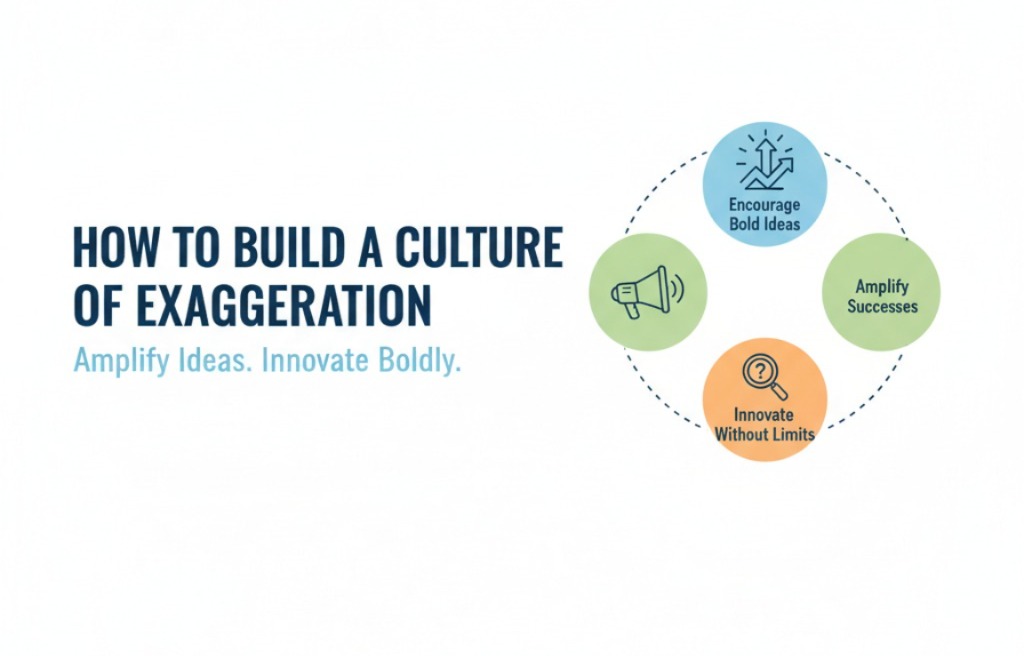
How to Build a Culture of Exaggeration
A culture of exaggeration requires structure, not chaos.
Define the Brand’s Dramatic Identity
Drama needs direction. Because teams need clarity, leaders must define the emotional tone of the brand. Once the tone is set, exaggeration becomes consistent rather than random.
Turn Values Into Dramatic Behaviors
Values become powerful only when dramatized. For example, “boldness” becomes “pitch ideas like you’re on stage.” Meanwhile, “ownership” becomes “speak as if the brand is your name.” These behaviors turn exaggeration into action.
Use Exaggerated Language Intentionally
Words shape culture. When leaders use phrases like “legendary launch,” “iconic moment,” or “industry‑shaking idea,” teams feel the emotional lift. Consequently, ambition rises.
Celebrate Wins Theatrically
Celebration reinforces exaggeration. Whether it’s a dramatic announcement or a symbolic ritual, theatrical recognition strengthens the culture. Because people crave emotional reward, they repeat the behaviors that earn it.
Encourage Storytelling Across the Team
Stories spread exaggeration naturally. When employees retell moments with flair, the culture becomes more expressive. As a result, the brand gains personality.
The Benefits of a Culture of Exaggeration
Exaggeration transforms how teams think, act, and create.
Creativity Expands Rapidly
Exaggeration removes limits. Because teams feel free to think bigger, ideas become more daring.
Ambition Increases Automatically
Big language creates big expectations. Consequently, teams stretch beyond their comfort zones.
Brand Identity Becomes More Memorable
Exaggerated cultures produce exaggerated brands. Since dramatic brands stand out, customers remember them.
Momentum Builds Faster
Drama accelerates action. When everything feels urgent and exciting, teams move quickly.
Examples of Exaggeration Done Right
Startups That Pitch Like Performers
Some startups exaggerate their mission intentionally. Because they speak with cinematic ambition, investors and teams feel the emotional pull.
Creative Agencies That Use Drama as Fuel
Agencies thrive on exaggeration. When they dramatize ideas, clients feel the excitement. Consequently, projects gain momentum.
Leaders Who Speak in Headlines
Great leaders exaggerate strategically. Since they use bold language, their messages spread like slogans.
The Odd Boss Philosophy: Exaggeration Is a Cultural Engine
Odd bosses don’t fear exaggeration — they design it. Although exaggeration may seem theatrical, it creates emotional alignment. Because people follow energy, exaggerated cultures outperform quiet ones.
A culture of exaggeration doesn’t distort reality. Instead, it amplifies meaning. It turns work into story. It turns teams into performers. It turns goals into legends.
Conclusion: Exaggeration Builds Cultures People Want to Join
Exaggeration is not noise. It is narrative. It is momentum. It is the emotional engine behind bold teams and unforgettable brands. When leaders exaggerate with intention, they transform ordinary workplaces into dramatic, high‑energy environments where people feel alive.
The future belongs to cultures that dare to be loud. When exaggeration becomes a shared language, ambition becomes a shared habit. That shift turns companies into movements.
Ready to Build a Culture of Exaggeration?
If you want a team that thinks bigger, speaks bolder, and performs with dramatic confidence, you’re ready for the Odd Boss approach.
👉 Partner with My Odd Boss to build a culture where exaggeration becomes your competitive advantage. Let’s turn your workplace into a stage worth watching.