Digital Marketing

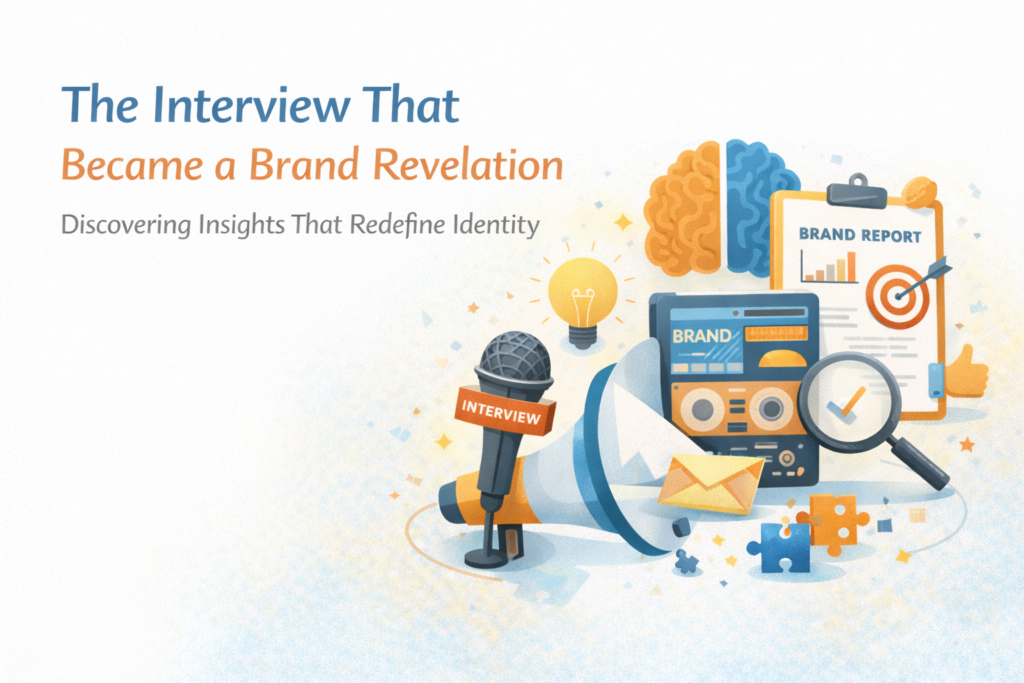
The Interview That Became a Brand Revelation

the interveiw that became a brand revelation

The Interview That Became a Brand Revelation

When Questions Became Theatre 

It started as a routine interview. Although the brand expected polite questions and rehearsed answers, the conversation spiraled into something else. Because the interviewer pushed deeper, the brand’s mask cracked. What emerged wasn’t a press statement — it was a revelation.

That moment transformed the brand forever.

The Interview That Became a Brand Revelation 


The Setup: Safe Territory 

The brand entered the studio with confidence. Because the team had prepared talking points, they expected a smooth performance. The first few questions felt predictable. Consequently, the answers sounded polished but forgettable.

The Twist: A Question That Cut Deep 

Then came the unexpected. The interviewer asked not about products, but about purpose. Because the brand had never articulated its deeper “why,” silence filled the room. That silence became the turning point.

The Revelation: Identity Exposed 

The spokesperson abandoned the script. Although risky, they spoke raw truth: the brand wasn’t just selling  it was rebelling. Because honesty replaced polish, the audience leaned in. That confession became the brand’s new identity.

Why Interviews Can Trigger Brand Revelations 

Interviews are not just conversations. They are mirrors.

They Strip Away Scripts 

Scripts feel safe. Because interviews demand spontaneity, they expose authenticity. This exposure builds trust.

They Force Brands to Confront Purpose 

Purpose drives loyalty. Although brands often hide behind features, interviews demand meaning. Consequently, revelations emerge.

They Transform Audiences Into Witnesses 

Witnesses remember drama. Because interviews feel live, revelations feel theatrical. This theatre amplifies impact.

The Psychology of Brand Revelation Through Interviews 

Revelations work because they manipulate emotion.

Vulnerability Creates Connection 

Audiences crave honesty. Because vulnerability feels human, it builds loyalty.

Surprise Creates Memory 

Surprise intensifies recall. Although predictable answers fade, shocking truths stick.

Conflict Creates Drama 

Drama fuels engagement. Since interviews often challenge brands, conflict creates theatre.

Case Studies: Interviews That Became Brand Revelations 


A Fashion Label Confessing Its Chaos 

One designer admitted their collections weren’t polished  they were messy rebellions. Because honesty resonated, the brand became iconic.

A Tech Startup Owning Its Imperfections 

A founder confessed their app wasn’t flawless. Although risky, audiences loved the transparency. Consequently, downloads spiked.

A Food Brand Revealing Its Mission 

A chef admitted the brand wasn’t about recipes  it was about culture. Because that revelation felt authentic, loyalty soared.

How to Turn Interviews Into Brand Revelations 

Revelations must be intentional.

Prepare, But Leave Space for Honesty 

Preparation matters. Because authenticity matters more, leave room for raw truth.

Answer With Emotion, Not Just Facts 

Facts inform. Although emotion persuades, brands must speak with feeling.

Embrace Vulnerability as Theatre (H3)

Vulnerability feels risky. Because theatre thrives on risk, it creates unforgettable moments.

Transform Confessions Into Strategy 

Confessions must become campaigns. Since revelations spark identity, brands must amplify them.

The Odd Boss Philosophy: Interviews Are Stages, Not Q&As 

Odd bosses don’t treat interviews as polite exchanges. They treat them as theatre. Although questions feel simple, answers can become performances. Because audiences crave drama, interviews become stages for revelation.

Conclusion: The Interview That Became a Brand Revelation Changed Everything 

Interviews can expose truth. They can provoke emotion. They can transform identity. Because audiences crave authenticity, interviews often become revelations.

When brands embrace that theatre, they stop answering questions and start commanding attention. That shift transforms their presence, their reach, and their influence.

When Questions Became Theatre

Once upon a time, questions were simple tools used to gather facts, clarify details, or test knowledge. However, in today’s world, questions have evolved.

They are no longer just inquiries; they are performances. Questions have become theatre, shaping conversations, sparking drama, and commanding attention

  1. First of All: The Spotlight Question

Some questions shine like spotlights. They don’t just ask—they illuminate hidden truths.

  • Transition: As a result, audiences lean forward, waiting for the answer as if it were a plot twist.
  1. Next: The Villain Question

Every play needs tension. Some questions exaggerate flaws, challenge authority, or expose contradictions.

  • Transition: Consequently, they create drama that keeps the audience hooked.
  1. Meanwhile: The Comic Relief Question

Odd questions can be playful, silly, or exaggerated. They break tension and spark laughter.

  • Transition: In contrast, ordinary questions fade into the background.
  1. Furthermore: The Shock Question

Some questions arrive like fireworks unexpected, bold, unforgettable.

  • Transition: Therefore, they stick in memory long after the conversation ends.
  1. After That: The Festival of Curiosity

Questions invite participation. They turn conversations into collective experiences, like a festival of ideas.

  • Transition: As a result, audiences feel part of the performance, not just spectators.
  1. In Addition: The Emotional Question

Questions don’t just seek answers—they stir feelings. “Why does this matter to you?” transforms dialogue into connection.

  • Transition: Moreover, emotion makes the question unforgettable.
  1. Beyond That: The Power Question

Some questions shift the stage. They challenge norms, spark revolutions, or redefine professionalism.

  • Transition: Consequently, they become catalysts for change.
  1. Meanwhile Again: The Storytelling Question

Odd brands use questions as narrative devices—“What if boredom was the villain?”

  • Transition: In turn, the question itself becomes the beginning of a story.
  1. Additionally: The Joyful Question

Questions can be playful invitations—“What’s the oddest idea you’ve ever had?”

  • Transition: Therefore, they spark creativity and joy in business conversations.
  1. Finally: The Curtain Call Question

At the end of the play, one question lingers: “What did we learn?”

  • Transition: Ultimately, questions close the performance with resonance, leaving audiences buzzing.

🎤 Final Bow

Questions are no longer just tools—they are acts of theatre. Odd brands know how to stage them, exaggerate them, and turn them into unforgettable performances.

Ready to transform your brand’s questions into theatre? My Odd Boss helps you craft conversations that don’t just ask—they perform, provoke, and inspire.

Why Ordinary Dreams Create Ordinary Results
Dreams shape direction. However, not all dreams are created equal. While many people dream, only a few achieve extraordinary results. Why? Because ordinary dreams often lead to ordinary outcomes. In fact, when goals lack clarity, ambition, and emotional drive, results usually remain average.

Therefore, understanding the connection between dreams and results is essential. More importantly, learning how to elevate your dreams can completely transform your personal and professional life.


.

What Are Ordinary Dreams?

Ordinary dreams are safe, familiar, and comfortable. For example, they sound like:

  • “I just want a stable job.”
  • “I want to be comfortable.”
  • “I hope things work out.”

At first glance, these dreams seem reasonable. However, they lack urgency and vision. As a result, they don’t demand growth, discipline, or bold action.

Moreover, ordinary dreams rarely challenge limiting beliefs. Consequently, they keep people stuck in routines instead of pushing them toward progress.

Why Ordinary Dreams Lead to Ordinary Results

1. They Don’t Inspire Massive Action

Without a powerful dream, motivation fades quickly. Therefore, people only take minimal action—just enough to get by. Over time, this results in average performance and predictable outcomes.

In contrast, bold dreams require consistent effort. Because they feel meaningful, they naturally fuel persistence.

2. They Keep You in Your Comfort Zone

Ordinary dreams feel safe. However, growth never happens in comfort. When goals don’t scare you, they don’t stretch you.

As a result, people avoid risks, resist change, and settle for less. Eventually, this mindset produces ordinary results—again and again.

3. They Lack Emotional Connection

Dreams without emotion are easy to abandon. Therefore, when challenges arise, ordinary dreams collapse under pressure.

On the other hand, emotionally charged dreams create resilience. Even when things go wrong, purpose keeps you moving forward.

The Psychology Behind Big Dreams

Why Ordinary Dreams Lead to Ordinary Results
Big dreams activate the brain differently. Specifically, they engage focus, creativity, and problem-solving. As a result, your mind starts searching for opportunities instead of excuses.

Additionally, ambitious dreams rewire self-identity. You stop asking, “Can I do this?” and start asking, “How can I do this?”

Thus, mindset shifts first results follow later.

How to Upgrade from Ordinary to Extraordinary Dreams

1. Dream Bigger Than Logic Allows

Initially, logic may say your dream is unrealistic. However, that’s exactly the point. Big dreams force growth.

Therefore, allow yourself to imagine without limits before worrying about “how.”

2. Attach a Strong Why

When your dream connects to purpose, action becomes easier. For example, ask yourself:

  • Who benefits if I succeed?
  • What pain am I solving?
  • What legacy do I want to leave?

As a result, your dream becomes non-negotiable.

3. Turn Dreams into Clear Vision

Vague dreams create vague results. Consequently, clarity is essential.

Instead of saying, “I want success,” define:

  • What success looks like
  • When you want it
  • Why it matters

Therefore, your brain receives clear instructions and begins executing.

Case Study: From Ordinary Dream to Extraordinary Results

Meet Rahul – A Corporate Employee with a Safe Dream


Rahul worked in a mid-level corporate job earning a decent salary.

His dream was simple:

“I want a promotion and a slightly higher income so life can be comfortable.”

Because his dream was modest, his actions were too:

He worked only during office hours

Avoided taking leadership roles

Didn’t learn new skills outside work

Waited for yearly appraisals

After five years, Rahul got small raises — but nothing life-changing.

His dream created ordinary results.

The Turning Point


One day Rahul attended a seminar on entrepreneurship and personal growth.

He realized something powerful:

“I’ve been dreaming small because I was afraid of failing big.”

So he changed his dream:

  •  Instead of just a promotion, he aimed to build a digital marketing business alongside his job and become financially independent within five years.

Suddenly, his actions changed:

  • Learned marketing skills online every night
  • Took freelance projects on weekends
  • Networked with business owners
  • Invested time in personal development

The Result

Within three years:

  • Rahul was earning more from his side business than his job
  • Quit corporate life
  • Started a small agency

His life transformed not because of luck, but because his dream became bigger and clearer.

Why Big Dreams Create Bigger Results

Here’s what happens when you dream boldly:

1. Bigger Dreams Create Urgency

You can’t stay lazy when your dream excites you.

2. Bigger Dreams Force Growth

You must improve skills, mindset, and habits.

3. Bigger Dreams Build Resilience

Failures feel like lessons, not stopping points.

4. Bigger Dreams Attract Opportunities

People, ideas, and chances show up when you take bold action.

Conclusion: Dream Bigger to Live Bigger

Ordinary dreams are safe.
But safety rarely leads to greatness.

If you dream only of what feels realistic today, you’ll stay in the same place tomorrow.

Extraordinary results require:

  •  Extraordinary vision
  • Extraordinary effort
  •  Extraordinary belief

Your life will never rise above the size of your dreams.

So don’t just wish for comfort.
Don’t settle for “good enough.”

  •  Dare to dream bigger.
  •  Act bolder.
  • Create extraordinary results.

At My Odd Boss, we help businesses build meaningful brands through strategy, design, and consistency.

Need Professional Digital Marketing Support ?

We help brands grow with data-driven statergies and creative execution.

About My Odd Boss

My Odd Boss is a full-service agency offering branding, design, printing, digital marketing, web development, and consulting services.

Related Insights

chatgpt image feb 6, 2026, 07 18 17 pm

The Corporate Costume

Dressing Identity in Oddness Professional identity is not stitched from suits and ties; instead, it is sewn from spectacle. Because audiences crave authenticity, odd branding

Read More »
branding is theatre

Branding Is Theater

Branding Is Theater: How to Turn Your Business to a Stage where the Customers Cheer. In the current hyper competitive market place, products are readily

Read More »

Ready To Grow Your Brand With Confidence ?

Partner with My Odd Boss for statergy-led digital solutions.

Scroll to Top