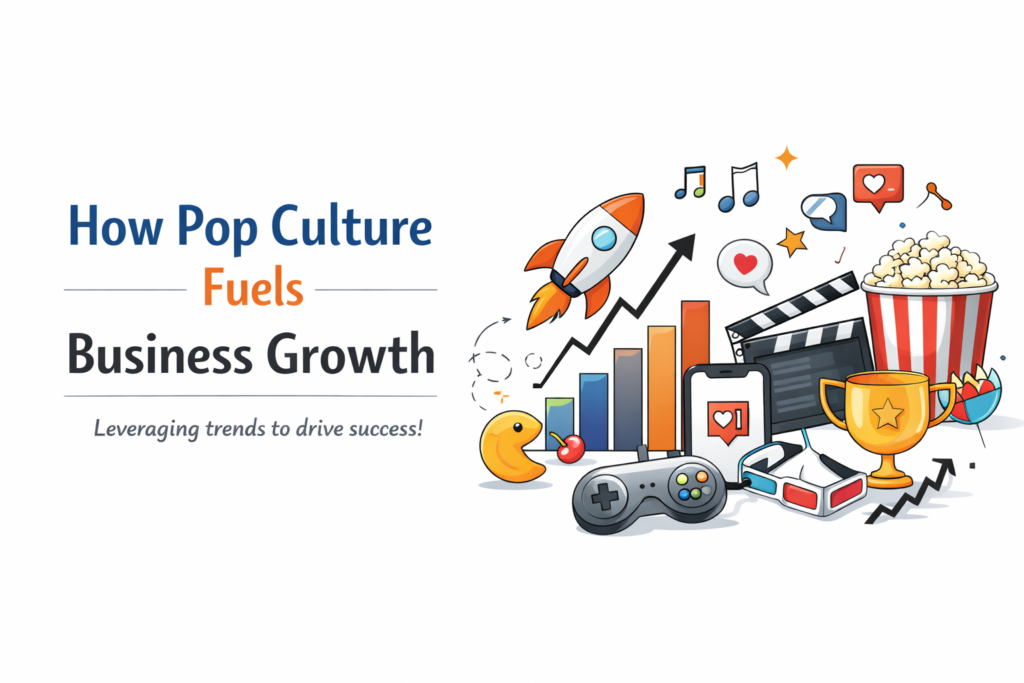
How Pop Culture Fuels Business Growth
Pop culture is not decoration; instead, it is the oxygen of modern business. Because audiences crave connection, brands that harness pop culture dominate markets. While traditional strategies whisper logic, pop culture screams emotion. Consequently, businesses that embrace cultural trends grow faster, scale wider, and command loyalty.
Pop culture is not a side dish; rather, it is the feast. It is not background noise; instead, it is the drumbeat that drives consumer memory. Therefore, brands that ignore it fade into silence, while those that embrace it rise into legend.
The Psychology of How Pop Culture Fuels Business Growth
Emotion in Pop Culture
Emotion drives recall, and pop culture amplifies emotion deliberately. Therefore, audiences remember the meme, the moment, and the movement rather than the technical detail. Moreover, emotion transforms transactions into theatre.
Identity in Pop Culture
Identity fuels belonging, and pop culture dramatizes personality. Consequently, audiences rally behind brands that feel like tribes rather than faceless corporations. Furthermore, identity transforms consumption into ritual.
Surprise in Pop Culture
Surprise jolts the brain, and pop culture thrives on shock. Therefore, audiences replay the twist long after the scroll. In addition, surprise magnifies virality, so campaigns spread faster than logic ever could.
The Science Behind Pop Culture and Business Growth
Neurological Insights
Because dopamine spikes during cultural spectacle, audiences feel rewarded. Moreover, the amygdala prioritizes emotional experiences, so pop culture dominates recall. Consequently, emotional arousal strengthens synaptic connections, and memory becomes durable.
Behavioral Economics
Distinctiveness bias ensures cultural campaigns stand out, while scarcity effect magnifies urgency. Additionally, social proof attracts followers when pop culture goes viral. Therefore, businesses that leverage culture outperform those that ignore it.
Historical Roots of Pop Culture in Business Growth
Oddness and spectacle have always ruled commerce. For instance, Elvis Presley fueled fashion sales, Michael Jackson fueled Pepsi’s dominance, and Marvel fueled Disney’s empire. Consequently, pop culture became the natural engine of business growth. Moreover, audiences expected theatre, so brands delivered.
Case Studies: How Pop Culture Fuels Business Growth in Action
Nike and Pop Culture Performance
Nike dramatized ambition with “Just Do It.” Because athletes became cultural icons, Nike transformed shoes into symbols. Consequently, sales soared, and loyalty became religion.
Apple and Pop Culture Theatre
Apple dramatized launches with cultural spectacle. Since audiences craved innovation, Apple transformed products into events. Therefore, loyalty intensified, and fandom became obsession.
Supreme and Pop Culture Scarcity
Supreme dramatized drops with unpredictable chaos. Because fashion became cultural theatre, Supreme exaggerated scarcity. Consequently, resale markets exploded, and hype became hysteria.
Red Bull and Pop Culture Adrenaline
Red Bull dramatized thrill with extreme sports. Since audiences craved adrenaline, Red Bull staged theatre. Therefore, brand recall dominated, and energy became empire.
Duolingo and Pop Culture Oddness
Duolingo dramatized humor with absurd TikTok skits. Because learning apps usually play serious, Duolingo embraced comedy. Consequently, virality exploded, and education became entertainment.
Interesting Topic: Memes as Business Engines
Memes are not jokes; instead, they are cultural currency. Because memes spread faster than ads, brands that embrace them dominate virality. Consequently, memes fuel growth by embedding brands into everyday conversation. Moreover, memes transform marketing into folklore.
How Pop Culture Fuels Business Growth Strategically
Shock Campaigns
Shock provokes emotion, and audiences remember the jolt. Therefore, pop culture campaigns dominate recall.
Scarcity Campaigns
Scarcity dramatizes urgency, and audiences act instantly. Consequently, pop culture campaigns dominate conversions.
Lifestyle Campaigns
Lifestyle dramatizes aspiration, and audiences imagine themselves inside unique communities. Therefore, pop culture campaigns dominate loyalty.
Humor Campaigns
Humor dramatizes oddness, and audiences share content widely. Consequently, pop culture campaigns dominate virality.
Framework: How to Harness Pop Culture for Business Growth
Steps to Implement Pop Culture Strategy
- Identify cultural triggers, and amplify them.
- Align campaigns with cultural values deliberately.
- Balance spectacle with clarity consistently.
- Stage campaigns as theatre strategically.
- Measure emotional impact continuously.
Risks of Pop Culture in Business Growth
Excessive Oddness
Too much oddness feels chaotic. Consequently, audiences disengage.
Miscommunication
Pop culture exaggerates meaning. Therefore, misuse sends wrong signals.
Alienation
Pop culture feels niche. Consequently, mainstream audiences risk exclusion.
The Odd Boss Philosophy: Owning Pop Culture for Business Growth
Odd bosses don’t chase discounts. Instead, they dramatize rebellion. Although safe branding feels predictable, pop culture feels alive. Because people follow energy, cultural branding wins.
Pop culture is not failure. It is strategy. It is rebellion. It is theatre. When brands embrace it, they stop whispering and start commanding attention.
Conclusion: How Pop Culture Fuels Business Growth
Audiences don’t remember the quiet ad; instead, they remember the outrageous stunt. They don’t replay the product sheet in their minds; rather, they replay the theatre. Pop culture is the thunderclap that shakes memory, the lightning bolt that burns itself into imagination, the tidal wave that sweeps away logic. Discounts are dust. Pop culture is destiny.
When brands embrace pop culture, they don’t just sell they hypnotize. They don’t just persuade — they possess. They don’t just inform they ignite. Audiences will forget the numbers, the charts, the rational offers. However, they will remember the gasp, the laugh, the shock, and the roar.
Pop culture is not decoration. It is the weapon. It is the crown. It is the empire. Brands that dare to stage culture become unforgettable legends, while those clinging to logic vanish into silence. Pop culture does not fuel growth quietly; instead, it detonates it. It does not whisper opportunity; rather, it screams empire
🎭 How Pop Culture Fuels Business Growth
Pop culture isn’t just entertainment it’s the engine of modern business growth. From viral memes to blockbuster movies, brands that tap into cultural moments don’t just sell products they become part of the story. So how exactly does pop culture fuel business growth? Let’s break it down.
1. First of All: The Spotlight Effect
Pop culture shines a spotlight on whatever it touches. When a brand connects to a trending show, song, or meme, it instantly steps into the cultural conversation.
Transition: As a result, visibility skyrockets, and consumers see the brand as relevant and alive.
2. Next: The Emotional Connection
Pop culture is emotional—it makes people laugh, cry, or cheer. Brands that align with these cultural emotions create deeper bonds with audiences.
Transition: Consequently, consumers don’t just buy; they feel invested in the brand’s story.
3. Meanwhile: The Virality Factor
Memes, challenges, and viral trends spread faster than traditional ads. Brands that plug into these cultural waves ride the momentum.
Transition: In contrast, campaigns without cultural hooks struggle to gain traction.
4. Furthermore: The Social Proof Loop
When celebrities, influencers, or cultural icons endorse a brand, it gains instant credibility.
Transition: Therefore, pop culture acts as social proof, convincing audiences that the brand is worth their attention.
5. After That: The Innovation Spark
Pop culture inspires creativity. Brands remix trends, parody icons, or exaggerate cultural moments to stand out.
Transition: As a result, innovation feels natural, not forced, because it’s rooted in what people already love.
6. In Addition: The Festival Effect
Pop culture thrives in collective experiences—concerts, movie releases, sports events. Brands that show up dramatically in these spaces dominate.
Transition: Moreover, these cultural stages amplify brand presence far beyond traditional marketing.
7. Finally: The Legacy of Culture
Pop culture moments become history. Brands that embed themselves in these moments are remembered long after the trend fades.
Transition: Ultimately, cultural relevance builds long‑term growth, while isolated campaigns vanish.
🎤 Final Bow
Pop culture fuels business growth because it transforms brands into characters in the cultural play. They don’t just advertise—they perform, connect, and become part of the collective memory.
Partner with My Odd Boss to craft pop culture strategies that shock, seduce, and dominate.
Let’s turn your campaigns into performances audiences will never forget.