Digital Marketing

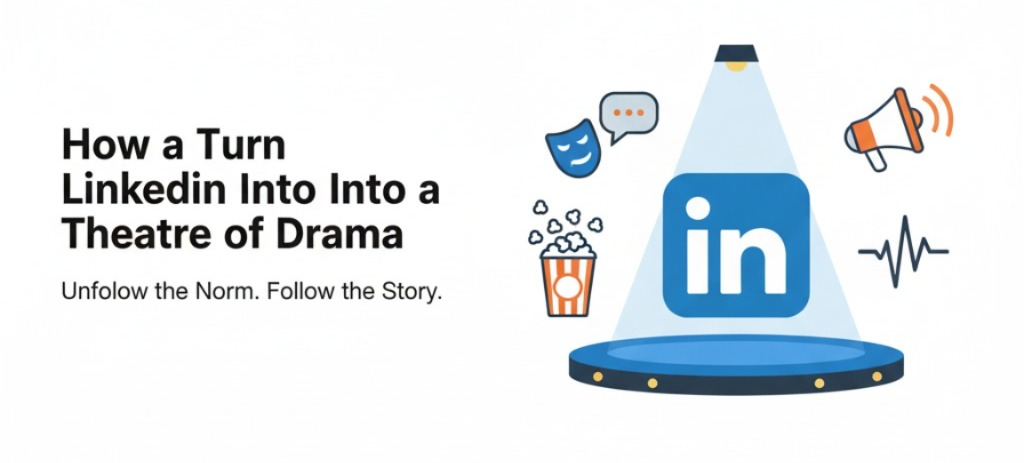
How to Turn LinkedIn Into a Theatre of Drama

How to Turn LinkedIn Into a Theatre of Drama

How to Turn LinkedIn Into a Theatre of Drama

LinkedIn Is Boring Only If You Are 

 How to turn Linkedin into theatre of drama

LinkedIn has a reputation for being stiff. Although the platform was built for professionals, it now rewards personality more than polish. Because audiences crave emotion, storytelling, and authenticity, LinkedIn has quietly become a stage. Odd bosses thrive on stages. They don’t just post — they perform.

When leaders treat LinkedIn like theatre, their content becomes magnetic. As a result, their posts travel further, their voice becomes sharper, and their brand becomes unforgettable.

Why LinkedIn Needs More Drama 

Drama isn’t chaos. It’s emotional contrast.

Drama Cuts Through Corporate Noise 

Corporate language puts people to sleep. Because drama introduces tension, it wakes the feed up instantly. This tension makes your message impossible to ignore.

Drama Makes Stories Stick 

Stories with emotional highs and lows stay in memory longer. Although facts matter, feelings spread. Consequently, dramatic posts outperform neutral ones.

The Psychology Behind LinkedIn Drama 

Drama works because it taps into human instincts.

People Respond to Vulnerability 

Vulnerability creates connection. Because people crave honesty, dramatic storytelling feels refreshing. This emotional openness builds trust quickly.

People Love Narrative Tension 

Tension creates curiosity. When a post hints at conflict, readers stay longer. As a result, engagement increases naturally.

How to Turn LinkedIn Into a Theatre of Drama 

Drama requires structure, not chaos.

Start With a Hook That Feels Like a Plot Twist 

The first line decides everything. Because LinkedIn truncates long posts, your opener must hit hard. A dramatic hook forces people to expand the post.

Use Emotional Contrast Throughout the Story 

Contrast creates movement. Whether it’s failure vs. success or fear vs. courage, emotional swings make your content memorable. Consequently, your story feels alive.

Add Exaggeration Strategically 

Exaggeration amplifies emotion. Although it must remain grounded, a heightened tone makes your message more dramatic. This amplification strengthens impact.

Write Like You’re Speaking to an Audience 

LinkedIn is a stage. When you write with rhythm, pacing, and presence, your posts feel like performances. As a result, your voice becomes recognizable.

End With a Mic‑Drop Insight 

The ending shapes the memory. Because people remember the final line, a mic‑drop moment increases shares and saves.

Types of Drama That Work on LinkedIn 

Different dramatic styles serve different goals.

The Hero’s Journey Post 

This format turns your experience into a story. Because it highlights struggle and growth, audiences relate instantly.

The Confession Post 

Confessions feel raw. Although they require courage, they build deep trust. Consequently, they generate strong engagement.

The Hot‑Take Post 

Hot takes spark conversation. Since they challenge norms, they attract attention quickly.

The Exaggerated Workplace Moment 

Workplace drama is universal. When you dramatize everyday chaos, people feel seen.

Why Most LinkedIn Posts Fail 

Most posts fall flat because they lack emotion.

They Sound Robotic 

Robotic language kills connection. Because it feels generic, people scroll past instantly.

They Avoid Conflict 

Conflict creates tension. When posts avoid it, they lose power. Consequently, engagement drops.

They Don’t Use Storytelling

Stories move people. Although data matters, stories make data meaningful.

Examples of LinkedIn Drama Done Right (H2)

Founders Sharing Their “Almost Gave Up” Moment

These posts hit hard. Because they reveal vulnerability, they build loyalty.

Leaders Turning Failures Into Plot Twists 

Failure stories feel human. As a result, they attract massive engagement.

Creators Using Humor to Exaggerate Corporate Life 

Humor disarms. When creators dramatize meetings, deadlines, or office chaos, the feed reacts instantly.

The Odd Boss Philosophy: LinkedIn Is a Stage, Not a Resume 

Odd bosses don’t treat LinkedIn like a CV. They treat it like theatre. Although professionalism matters, personality matters more. Because people follow energy, dramatic storytelling becomes a strategic advantage.

LinkedIn drama isn’t about being messy. Instead, it’s about being memorable. It’s about turning your insights into scenes. It’s about performing your brand with intention.

Conclusion: Drama Is the New Professionalism 

LinkedIn has changed. The platform no longer rewards neutrality. It rewards emotion, storytelling, and boldness. Because drama creates connection, leaders who embrace it rise faster.

When you turn LinkedIn into a theatre, your content becomes unforgettable. That shift transforms your brand, your influence, and your audience

Ready to Turn LinkedIn Into Your Stage? 

If you want a LinkedIn presence that feels bold, dramatic, and impossible to ignore, you’re ready for the Odd Boss approach.

👉 Partner with My Odd Boss to craft a LinkedIn identity that performs, provokes, and captivates. Let’s turn your feed into a theatre of drama.
Why Ordinary Dreams Create Ordinary Results
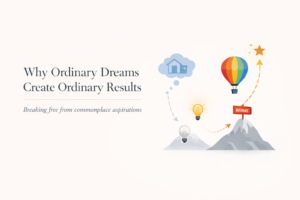
Dreams shape direction. However, not all dreams are created equal. While many people dream, only a few achieve extraordinary results. Why? Because ordinary dreams often lead to ordinary outcomes. In fact, when goals lack clarity, ambition, and emotional drive, results usually remain average.

Therefore, understanding the connection between dreams and results is essential. More importantly, learning how to elevate your dreams can completely transform your personal and professional life.


.

What Are Ordinary Dreams?

Ordinary dreams are safe, familiar, and comfortable. For example, they sound like:

  • “I just want a stable job.”
  • “I want to be comfortable.”
  • “I hope things work out.”

At first glance, these dreams seem reasonable. However, they lack urgency and vision. As a result, they don’t demand growth, discipline, or bold action.

Moreover, ordinary dreams rarely challenge limiting beliefs. Consequently, they keep people stuck in routines instead of pushing them toward progress.

Why Ordinary Dreams Lead to Ordinary Results

1. They Don’t Inspire Massive Action

Without a powerful dream, motivation fades quickly. Therefore, people only take minimal action—just enough to get by. Over time, this results in average performance and predictable outcomes.

In contrast, bold dreams require consistent effort. Because they feel meaningful, they naturally fuel persistence.

2. They Keep You in Your Comfort Zone

Ordinary dreams feel safe. However, growth never happens in comfort. When goals don’t scare you, they don’t stretch you.

As a result, people avoid risks, resist change, and settle for less. Eventually, this mindset produces ordinary results—again and again.

3. They Lack Emotional Connection

Dreams without emotion are easy to abandon. Therefore, when challenges arise, ordinary dreams collapse under pressure.

On the other hand, emotionally charged dreams create resilience. Even when things go wrong, purpose keeps you moving forward.

The Psychology Behind Big Dreams

Why Ordinary Dreams Lead to Ordinary Results
Big dreams activate the brain differently. Specifically, they engage focus, creativity, and problem-solving. As a result, your mind starts searching for opportunities instead of excuses.

Additionally, ambitious dreams rewire self-identity. You stop asking, “Can I do this?” and start asking, “How can I do this?”

Thus, mindset shifts first results follow later.

How to Upgrade from Ordinary to Extraordinary Dreams

1. Dream Bigger Than Logic Allows

Initially, logic may say your dream is unrealistic. However, that’s exactly the point. Big dreams force growth.

Therefore, allow yourself to imagine without limits before worrying about “how.”

2. Attach a Strong Why

When your dream connects to purpose, action becomes easier. For example, ask yourself:

  • Who benefits if I succeed?
  • What pain am I solving?
  • What legacy do I want to leave?

As a result, your dream becomes non-negotiable.

3. Turn Dreams into Clear Vision

Vague dreams create vague results. Consequently, clarity is essential.

Instead of saying, “I want success,” define:

  • What success looks like
  • When you want it
  • Why it matters

Therefore, your brain receives clear instructions and begins executing.

Case Study: From Ordinary Dream to Extraordinary Results

Meet Rahul – A Corporate Employee with a Safe Dream


Rahul worked in a mid-level corporate job earning a decent salary.

His dream was simple:

“I want a promotion and a slightly higher income so life can be comfortable.”

Because his dream was modest, his actions were too:

He worked only during office hours

Avoided taking leadership roles

Didn’t learn new skills outside work

Waited for yearly appraisals

After five years, Rahul got small raises — but nothing life-changing.

His dream created ordinary results.

The Turning Point


One day Rahul attended a seminar on entrepreneurship and personal growth.

He realized something powerful:

“I’ve been dreaming small because I was afraid of failing big.”

So he changed his dream:

  •  Instead of just a promotion, he aimed to build a digital marketing business alongside his job and become financially independent within five years.

Suddenly, his actions changed:

  • Learned marketing skills online every night
  • Took freelance projects on weekends
  • Networked with business owners
  • Invested time in personal development

The Result

Within three years:

  • Rahul was earning more from his side business than his job
  • Quit corporate life
  • Started a small agency

His life transformed not because of luck, but because his dream became bigger and clearer.

Why Big Dreams Create Bigger Results

Here’s what happens when you dream boldly:

1. Bigger Dreams Create Urgency

You can’t stay lazy when your dream excites you.

2. Bigger Dreams Force Growth

You must improve skills, mindset, and habits.

3. Bigger Dreams Build Resilience

Failures feel like lessons, not stopping points.

4. Bigger Dreams Attract Opportunities

People, ideas, and chances show up when you take bold action.

Conclusion: Dream Bigger to Live Bigger

Ordinary dreams are safe.
But safety rarely leads to greatness.

If you dream only of what feels realistic today, you’ll stay in the same place tomorrow.

Extraordinary results require:

  •  Extraordinary vision
  • Extraordinary effort
  •  Extraordinary belief

Your life will never rise above the size of your dreams.

So don’t just wish for comfort.
Don’t settle for “good enough.”

  •  Dare to dream bigger.
  •  Act bolder.
  • Create extraordinary results.

At My Odd Boss, we help businesses build meaningful brands through strategy, design, and consistency.

Need Professional Digital Marketing Support ?

We help brands grow with data-driven statergies and creative execution.

About My Odd Boss

My Odd Boss is a full-service agency offering branding, design, printing, digital marketing, web development, and consulting services.

Related Insights

chatgpt image feb 6, 2026, 07 18 17 pm

The Corporate Costume

Dressing Identity in Oddness Professional identity is not stitched from suits and ties; instead, it is sewn from spectacle. Because audiences crave authenticity, odd branding

Read More »
branding is theatre

Branding Is Theater

Branding Is Theater: How to Turn Your Business to a Stage where the Customers Cheer. In the current hyper competitive market place, products are readily

Read More »

Ready To Grow Your Brand With Confidence ?

Partner with My Odd Boss for statergy-led digital solutions.

Scroll to Top